
After 40: when the body asks for more rhythm – not more performance
Share
Many women notice that the body changes over time. Energy may feel more uneven, sleep may be affected, mood may shift, and recovery may take longer than before. It can create a feeling that the body suddenly no longer “responds” in the same way as it used to.
The natural response is often to try to do more: train harder, eat more strictly, plan more, optimize more. But for many women, the opposite works better.
- Not more pressure.
- Not more rules.
- But more rhythm.
Small, recurring routines can become a way to create steadiness in everyday life – especially during periods when the body is changing hormonally, mentally, and practically.
Why does the body change after 40?
After 40, many women begin to approach a stage of life in which hormone balance gradually changes. Menopause is not a single event, but a process that can last for several years. Levels of, among other things, estrogen and progesterone change gradually, and the experience differs greatly from person to person.
Some barely notice the changes, while others find that sleep, energy, mood, focus, or recovery is more clearly affected in daily life.
This phase also often coincides with a period in life when many other things are happening at the same time: work, family, responsibility for children or teenagers, relationships, aging parents, and greater mental pressure. That is why it is important not to see the changes as a personal failure.
The body is not getting “worse.” It is simply signaling different needs.
The body often needs more predictability
When everyday life is full of decisions, even good habits can feel difficult. What should you eat? When should you rest? How can you find time to move? How do you create calm in the evening when the day has already been intense?
This is where routines can be more powerful than motivation.
Motivation varies. Routines carry you through.
A routine does not need to be advanced to be valuable. On the contrary, the most sustainable routines are often the ones that are so simple they work even when life is not perfect.
It can be about:
- starting the morning in roughly the same way
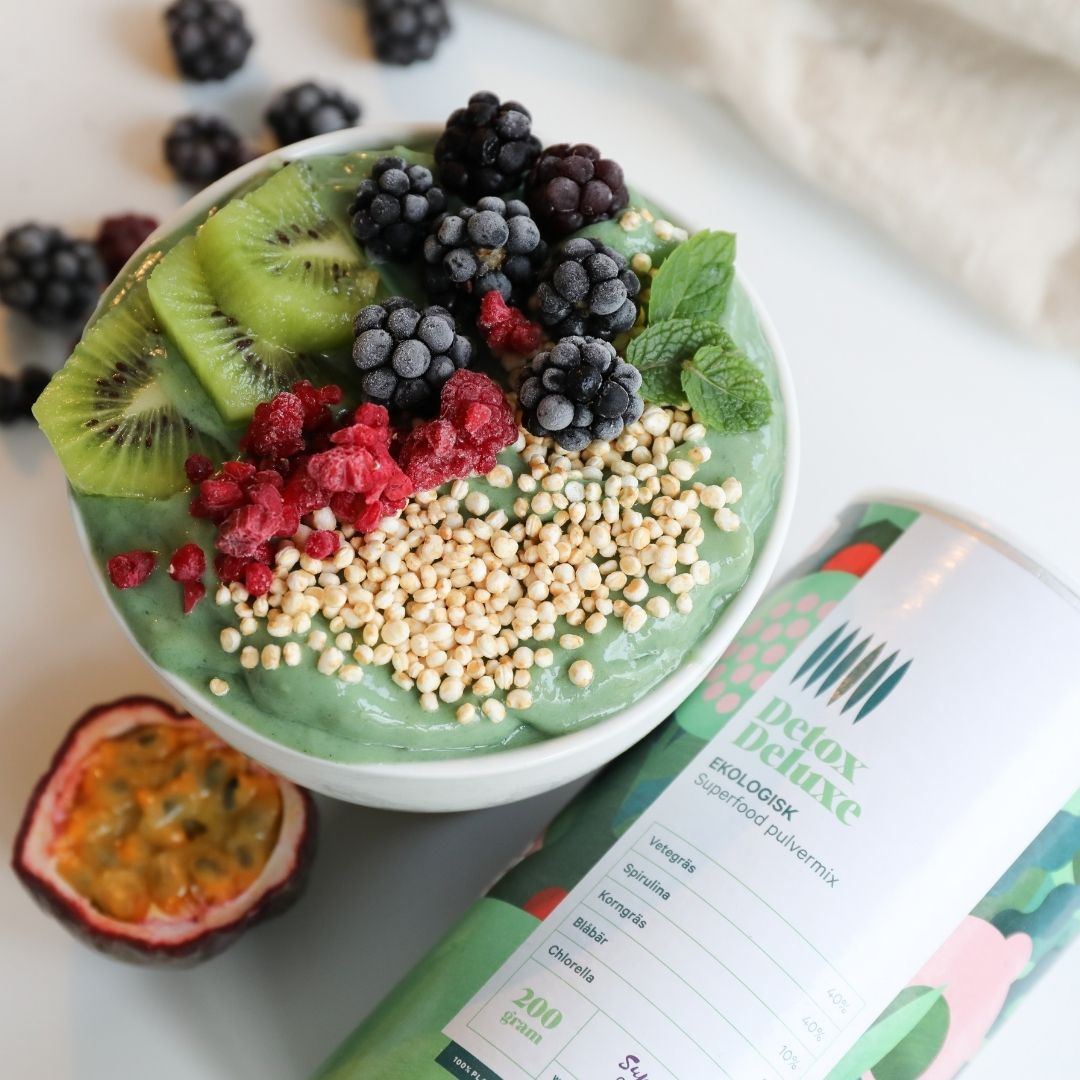
- having a simple breakfast or smoothie that repeats
- creating a clear evening ritual
- preparing something small the night before
- reducing the number of decisions around food and recovery
The important thing is not to create a “perfect” lifestyle, but to build small anchors into the day.
Nutrition after 40: focus on the whole
When the body changes, it is easy to get stuck on individual ingredients, trends, or quick fixes. But from a long-term perspective, the overall picture matters more.
For adults, a daily intake of vegetables, fruit, and berries is recommended, preferably at least 500 grams per day. Whole grains, legumes, nuts, and seeds are also examples of foods often highlighted as part of a varied and nutritious diet.
That does not mean every meal needs to be perfect. But it can be helpful to create simple everyday routines where vegetables, berries, fiber, and plant-based ingredients have a natural place.
A smoothie, yogurt bowl, or overnight oats can therefore be more than “just breakfast.” It can become an easy way to start the day with structure.
Example of a simple morning routine
A morning routine can be built around three parts:
1. Base
Yogurt, plant-based drink, kefir, or oats.
2. Color
Berries, fruit, or green leaves.
3. Extra structure
Seeds, nuts, oats, protein-rich topping, or a ready-made superfood blend.
The point is not that every ingredient should “fix” something. The point is to make it easier to repeat a nutritious habit.
Sleep and evening routines: the body needs to wind down
Sleep is one of the areas many women feel changes over the years. It may become harder to fall asleep, you may wake more often during the night, or sleep may not feel as restorative as before.
At the same time, evening is often the time when the body gets the least help. Many go straight from work, family logistics, screens, and everyday stress to bed – and expect the body to be able to switch off immediately.
But the body rarely works like a light switch.
An evening routine does not need to be long. It just needs to be clear enough to signal: now the day is shifting into rest.
For example, it can be helpful to slow the pace, dim the lights, avoid screens close to bedtime, and try to keep fairly regular sleep times.
Example of a simple evening routine
It could be:
- dimming the lights a little earlier
- putting the phone away
- preparing breakfast
- making a warm drink
- writing down tomorrow’s most important task
- spending five minutes in the kitchen without multitasking
A warm drink in the evening can become a symbolic transition – not because it must have a specific effect, but because the ritual itself creates calm and familiarity.
Physical activity: not as punishment, but as support
After 40, exercise can sometimes become loaded. Many feel they “should” do more, especially if the body is changing. But physical activity does not have to start with hard training programs.
Regular movement and strength training can be important parts of a lifestyle that supports the body’s long-term needs, especially when it comes to muscle, mobility, and everyday energy.
It may be enough to start very simply:
- 10 minutes of walking after lunch
- light strength training at home twice a week
- mobility work in the evening
- stairs instead of the elevator
- short breaks from sitting still
Again: it is not intensity that makes the routine sustainable. It is repetition.
Why ready-made routines can help
For many people, the problem is not a lack of knowledge. The problem is everyday friction.
You roughly know what is good, but it takes time to plan, shop, combine, and remember. This is where ready-made structures can make a difference.
A ready-made routine can reduce the number of decisions:
- What should I start the day with?
- What can I do in the evening?
- How do I make it easy to repeat?
- How can I include more plant-based ingredients without starting over every day?
Ready-made combinations of ingredients can work as a practical shortcut in the kitchen – not as a replacement for a varied diet, but as a way to make good habits more accessible.
A 2-step routine: morning and evening
An easy way to create structure is to divide the day into two natural parts.
Step 1: Morning – a nutritious start
The morning can be about giving the day a clear beginning. A smoothie, yogurt bowl, or porridge with berries, green ingredients, and plant-based additions can become a recurring routine that is easy to prepare.
Example: smoothie with berries and greens
- 2 dl yogurt or plant-based drink
- 1 dl frozen berries
- 1 handful spinach
- 1 tbsp chia seeds or oats
- optional superfood blend
- top with nuts or coconut
Step 2: Evening – a calm finish
The evening can instead be about winding down. Here the goal is not performance, but transition.
Example: warm evening drink
- warm plant-based drink or milk
- cinnamon or cardamom
- optional evening blend
- drink slowly, preferably without a screen
Simple is often what lasts.
When should you seek help?
Routines can be a valuable support in everyday life, but they do not replace medical care. If issues such as sleep problems, low mood, heavy sweating, hot flushes, anxiety, or mood swings affect daily life, it is wise to contact healthcare services.
It is especially important to seek care for bleeding after menopause, heavy or irregular bleeding, or if the symptoms feel difficult to manage.
Asking for help is not failure. It is taking the body seriously.
Summary: make it easier, not harder
After 40, the body may start asking for something different than before. Not necessarily more control, more rules, or harder demands – but more rhythm, recovery, and predictability.
Small routines can create a sense of stability in a phase where a lot is changing.
- A nutritious morning routine.
- A calm evening routine.
- More color on the plate.
- More consistency.
- Less decision fatigue.
That is often where sustainable habits begin.
Want to make it easier?
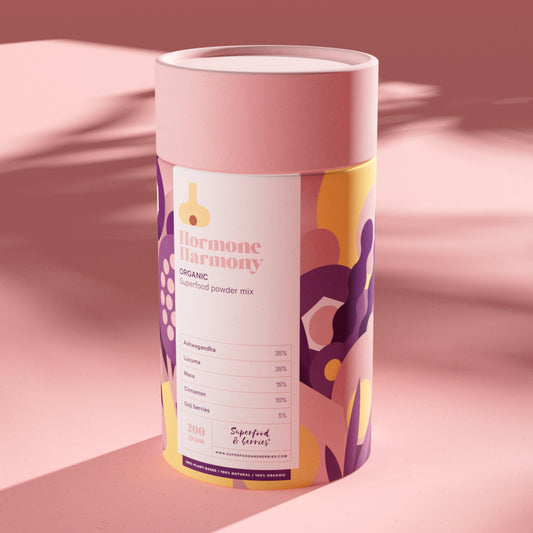
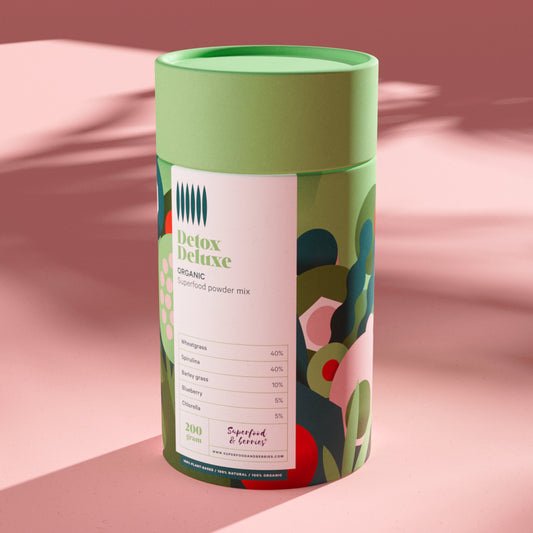
For those who want a ready-made structure, there is Female Harmony – a simple 2-step routine with superfood blends that can be used in morning and evening routines.
It is designed for those who want to create more rhythm in everyday life, without having to start from scratch every day.
👉 Discover Female Harmony – a simple 2-step routine for morning and evening
Sources
- 1177 Vårdguiden: Menopause
- 1177 Vårdguiden: Menopause symptoms
- 1177 Vårdguiden: Sleep problems
- The Swedish Food Agency: Dietary guidelines for adults
- The Swedish Food Agency: Vegetables, fruit and berries
- The Public Health Agency of Sweden: Physical activity and sedentary behavior